Thinner air means stronger UV, which fades and chalks finishes faster than at sea level. On south- and west-facing entries, choose our UV-stable specialized finish in a darker bronze or black that ages gracefully rather than a thin painted coat.
Climate fit guide
Denver weather changes the door spec.
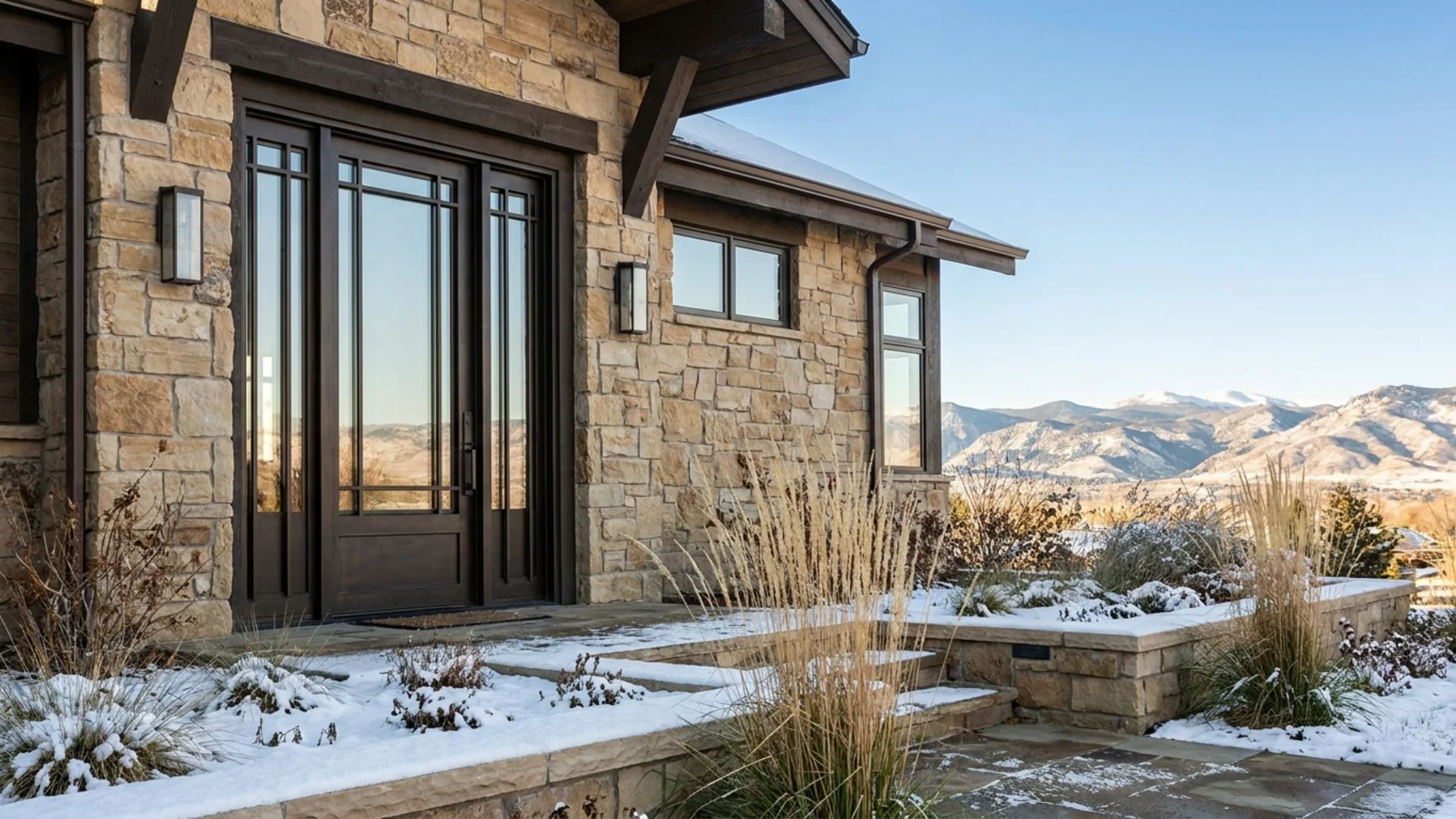
At 5,280 feet the sun is harder on finishes, winter nights run cold, and a single February afternoon can swing forty degrees. Finish, glass, seals, thresholds, and thermal performance should be settled for that climate before anyone talks about ornament.
Denver showroom
1591 W Alameda Ave Suite A
Denver, CO 80223
DenverLocal buyer guide
GlassPrivacy and climate
StyleDoor ideas
QuoteShowroom support
Spec notes
Climate checks before you quote.
Denver gets roughly 300 days of sun a year, low humidity, regular freeze-thaw cycles from late fall through spring, hail in summer, and steady wind where the plains meet the foothills. Each of those works on a different part of the door. Frame the first showroom conversation around what your opening actually faces.
Water that gets into a seal and freezes overnight will work it loose over time. Insulated, Low-E glass units, a thermal break in the frame, multi-point weatherstripping, and a proper sweep and threshold keep the cold out and stop condensation on the interior face.
Summer hail and Front Range wind reward tempered or laminated glazing and a tightly weatherstripped door. Forty-degree diurnal swings make a thermally broken frame and quality seals the difference between a door that stays tight and one that racks and whistles.

Glass & seals
Glass does most of the climate work.
On an iron door, the glazing package controls comfort and energy as much as the frame. Denver's cold winters and bright sun pull in opposite directions, so the glass spec is where the climate decision really lives.
- Low-E & insulated unitsA Low-E coating on an insulated (dual-pane) unit cuts winter heat loss and tempers the summer sun load on west-facing entries without darkening the foyer.
- Smart glassSwitchable smart glass turns clear-to-private on demand — useful where a street-facing foyer wants daylight most of the time and privacy on cue, with no blinds to fade in the UV.
- Seals & thresholdWeatherstripping, a thermal break, and an adjustable threshold are what hold up through freeze-thaw season. They're worth specifying as deliberately as the finish.
Denver guides
More door ideas for local homes.
Once the climate spec is set, the door still has to suit the architecture and the street. These guides cover door styles by home type, neighborhood character across the metro, and how to photograph your entry so the showroom can confirm the right glass and finish.
Neighborhood guideIron doors by Denver neighborhood.Denver buyers need a door recommendation that matches the street, the lot, and the way the home handles light and privacy.
Architecture style guideDoor styles that fit Denver homes.The right iron door should look native to the home, not copied from a catalog photo.
Install photo guidePhotos that help choose a Denver iron door.Send a few clear photos so the showroom can recommend the right iron door style, finish, glass, and next step.
Visit or call
Denver
1591 W Alameda Ave Suite A
Denver, CO 80223
Service area
DenverCherry HillsHighlands RanchLittletonLakewoodBoulderCastle RockGoldenCentennial
Showroom next step
See doors that fit homes in Denver.
Tell the Denver showroom which way your entry faces, whether it takes afternoon sun, and how cold the foyer runs in winter. The team will spec the finish, Low-E or insulated glass, smart glass, seals, and threshold to hold up to a mile-high climate — on an in-stock door or a custom build.